Safety Tips: Driving During Halloween
Bring home treats, not tragedies, follow these tips for a safe Halloween:
- Stay focused behind the wheel; even a brief distraction can cause tragedy.
- Drive well below the speed limit.
- Stay alert to activity on sidewalks and roads, as children may dash into the street unexpectedly, especially between parked cars.
- Exercise extra caution when entering or exiting driveways.
- Don’t assume children see you or are paying attention—make their safety your responsibility.
- Check that all vehicle lights are working properly.
- Never pass vehicles stopped in the roadway, as they may be dropping off children.
- If you’re waiting in a running vehicle while children trick-or-treat, turn on your hazard lights to alert other drivers.

Parents can help motorists, too:
- Ensure children are easily visible to drivers by equipping them with flashlights or glow sticks and dressing them in bright, reflective clothing or adding reflective tape to their costumes.
- Choose face makeup over masks so children’s vision remains clear and unobstructed.
- Teach children proper street-crossing habits: always look left, right, and left again before crossing.
- Remind children to stay on sidewalks and to cross streets only at corners or designated crosswalks.
- Always accompany your children while they trick-or-treat.
Safely Getting In or Out of a Commercial Motor Vehicle
Winter is a crucial time to remind drivers about the Three-Point Rule for safely entering and exiting trucks. Slippery conditions increase the risk of slips and falls.
The Three-Point Rule means always keeping three of your four contact points, either hands or feet, firmly secured.
For instance, when getting out of a truck:
- Keep one hand on the cab handle, one hand on the inside door handle, and one foot on a step while moving the other foot.
- Maintaining three points of contact at all times helps prevent accidents.
November 2–8: Drowsy Driving Prevention Week
The National Sleep Foundation established Drowsy Driving Prevention Week to educate the public about the risks of driving while fatigued and to help prevent accidents caused by drowsiness.
According to the National Highway Traffic Safety Administration (NHTSA), drowsy driving is responsible for at least 100,000 police-reported crashes and claims the lives of more than 1,550 Americans each year.
While every state enforces drunk driving laws, few have specific regulations targeting drowsy driving. New Jersey stands out by defining drowsy driving as recklessness under its vehicular homicide statute—known as Maggie’s Law. This law has increased awareness about the dangers of driving while fatigued and sparked legislative efforts in other states. Currently, at least eight states have twelve pending bills that address fatigued driving in various ways.
To learn more about Drowsy Driving Prevention Week, visit www.drowsydriving.org.
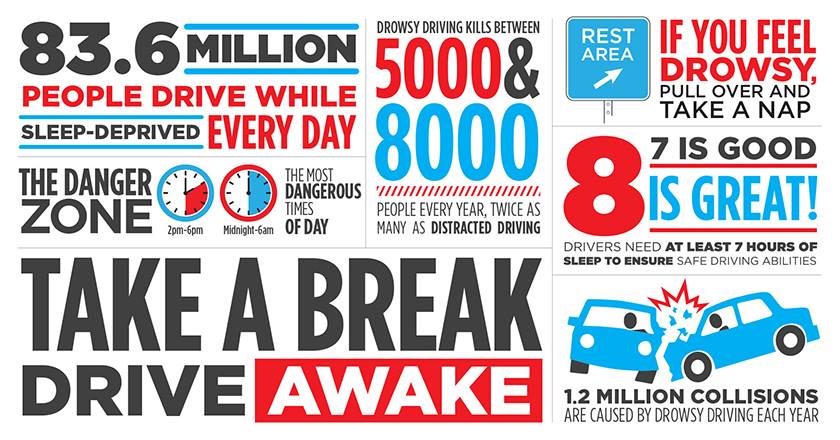
Tips for Staying Alert While Driving
- Prioritize sufficient sleep every night. If you need to stay up late, take an afternoon nap to recover. Should you start feeling sleepy on the road, pull over safely and take a 15-minute nap.
- Use caffeine for short-term alertness, but be aware it takes about 30 minutes to work and only lasts a few hours. Avoid caffeine late in the day to prevent sleep disruption.
- Stop for breaks every 100 miles or every two hours, and switch drivers if possible to stay refreshed.
- Don’t run the AC on MAX or Recirculation for long periods, as this can raise CO₂ levels and make you drowsy.
- Never drive after consuming alcohol. Besides being illegal, alcohol causes sleepiness and increases fatigue.
If you are planning a long trip, AAA recommends the following tips:
- Get a good night’s sleep before your trip. Drive during the hours you’re normally awake and plan overnight stays rather than traveling straight through.
- Avoid driving during your body’s “downtime,” typically mid-afternoon and between midnight and 6:00 a.m.
- If you have passengers, engage with them to stay alert — they can also help watch for signs of sleepiness.
- Schedule a break every two hours or every 100 miles. Take a nap, stretch, or get some light exercise before resuming your trip.
- Stop immediately if you notice any signs of drowsiness.
“Tricks” That Do Not Work to Stay Awake:
Opening the window, turning on the air conditioning, or playing loud music are not effective in keeping drivers alert for any extended period.
Time to “Fall Back,”Daylight Savings Time Change Next Week
Daylight Savings Time will “fall back” at 2:00 a.m. on Sunday, November 2nd.
Alert all drivers to the upcoming time change. Remind those on regular routes that shifting daylight may impact visibility at intersections and along streets. Even a one-hour shift can introduce unexpected visibility challenges on familiar roads.
Did You Know There’s a Federal Regulation About Passengers in Commercial Motor Vehicles?
Unauthorized Passengers – CFR 392.60
Unauthorized persons not to be transported:
Drivers are prohibited from transporting or allowing any person to be transported in a commercial motor vehicle (other than a bus) unless the motor carrier specifically authorizes it in writing.
Written authorization must include:
- The name of the person being transported
- The starting and ending points of the trip
- The authorization’s expiration date.
No written authorization is needed for Employees or other individuals assigned to the commercial motor vehicle by the motor carrier.
Anyone being transported for emergency assistance, such as during an accident or other urgent situation.
The 2025 Idealease/NPTC Fall Safety seminars have concluded!
Idealease and the National Private Truck Council NPTC hosted 8 safety seminars in the fall of 2025. Although the Spring and Fall sessions have concluded, get ready for the next sessions in the Spring and Fall of 2026. The one-day seminars will focus on basic safety and compliance, regulation changes and CSA. The seminars will be provided to all Idealease customers, potential customers and NPTC members at no charge. The seminar provides valuable information applicable for both novice and experienced transportation professionals.
To register for an upcoming seminars in 2026, click on the following link.
http://www.idealease.com/safety-seminar-registration
*The Idealease Safety Bulletin is provided for Idealease locations and their customers and is not to be construed as a complete or exhaustive source of compliance or safety information. The Idealease Safety Bulletin is advisory in nature and does not warrant, guarantee, or otherwise certify compliance with laws, regulations, requirements, or guidelines of any local, state, or Federal agency and/or governing body, or industry standards
Read More Posts